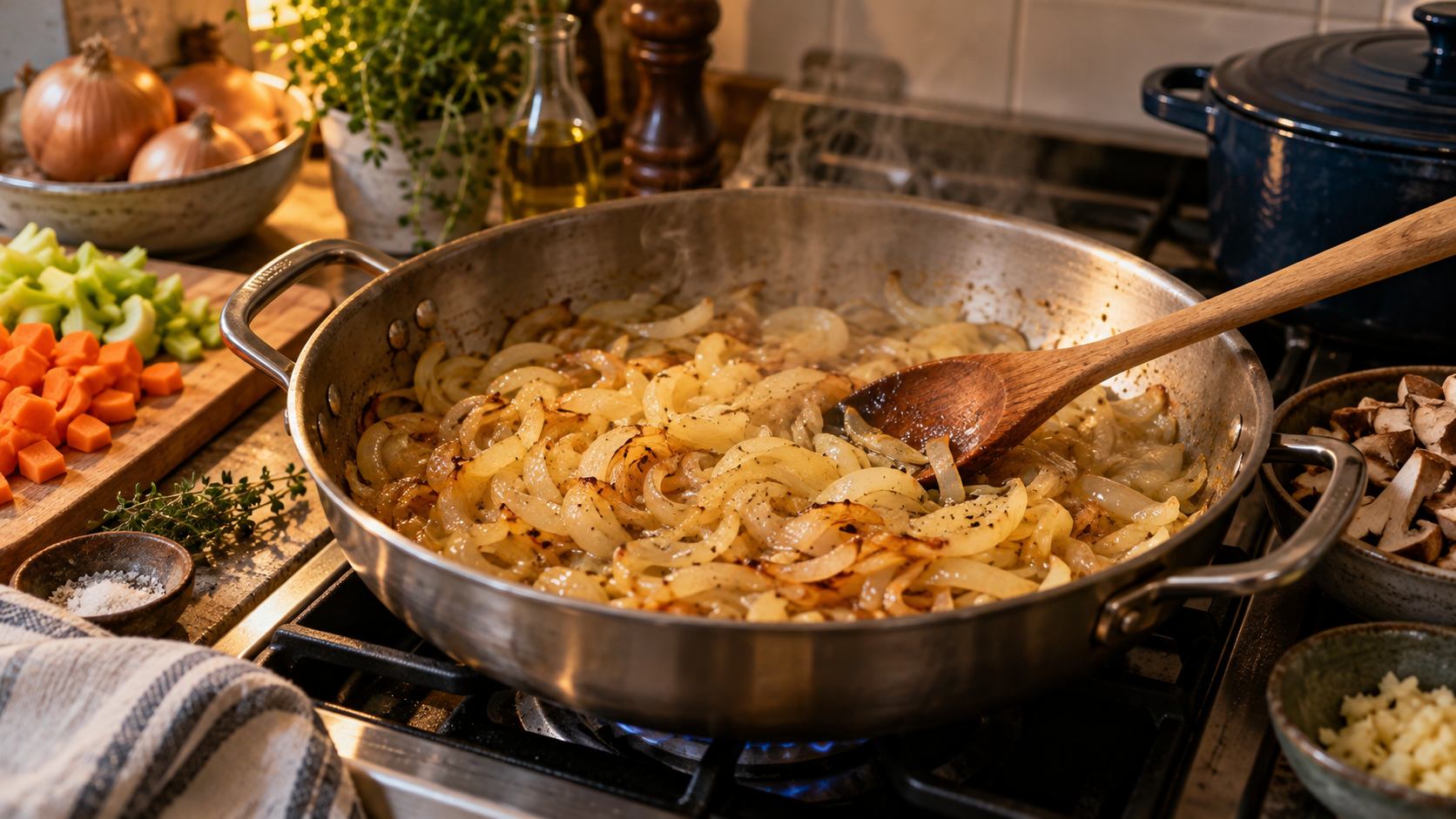
The suggested dinner was ready in twelve minutes, used everything in my cupboard and required me to possess a second cupboard with completely different things in it. An impressive trick. I was standing in the kitchen after a library shift, and the onion was not impressed either.
I had asked an AI tool for a flexible dinner. The answer looked flexible because it contained several cheerful substitutions. Then I read the actual sequence. Every ingredient appeared at once. Every texture would somehow become pleasant at the same speed. My single pan had been assigned the workload of a small restaurant.
This was one little kitchen experiment, not a scientific test of every cooking assistant. But it left me with a rule I like: a convincing recipe voice does not get to overrule the pan in front of me.
The recent argument about AI replacing cooks and food influencers makes the distinction interesting. Writing about a meal and making a meal overlap. They are not the same job. The kitchen has a way of refusing a sentence that sounds excellent on a screen.
Read the work, not the adjectives
When a recipe calls itself effortless, I look for where it has hidden the effort. Is the chopping already done? Are all the ingredients supposedly waiting in little bowls? Does the timing begin after the reader has found the saucepan, cleared the worktop and remembered where the colander went?
These tricks are not unique to generated recipes. A human can make dinner sound suspiciously easy too. The difference I noticed was how comfortably the answer smoothed over an inconsistency. It could explain a substitution beautifully without considering what that substitution did to the sequence.
For my own dinner, the useful question was small. Which ingredient needed attention first? Which could wait? What flavor did the dish already have, and what was genuinely missing? I had chickpeas, tomatoes and herbs. I did not need six more ingredients to make the idea feel like a complete recipe.
I wrote the plan in ordinary verbs. Start this. Add that. Taste. Decide. Leave a little room to change direction. The plan became less impressive and much easier to follow while someone was asking where the clean spoons had gone.
Let the suggestion remain a suggestion
An assistant can be helpful when I am tired of my own ideas. It can remind me of a combination or give me another way to think about what is available. The useful part is that the idea can be rejected or adjusted without a ceremony.
What I do not want is a tidy answer that makes me feel foolish for noticing that the timings do not make sense. If the pan needs another few minutes, it needs another few minutes. If the alternative ingredient changes the dish, the dish changes. A kitchen is not obliged to preserve the confidence of a paragraph.
The same goes for portion claims. My household's appetite does not become incorrect because a recipe announced how many people it would feed. I would rather note what actually worked than turn a disappointing serving into an argument with the internet.
Dinner eventually became a modest bowl of beans and tomatoes with herbs on top. I had rewritten most of the instructions, which is a funny definition of effortless assistance. Still, the first suggestion had given me somewhere to begin.
Use the idea if it helps. Keep the authority with the ingredients, your attention and the person actually doing the cooking. The tool can propose dinner. It does not get to tell the onion it is finished.

A thought worth keeping?