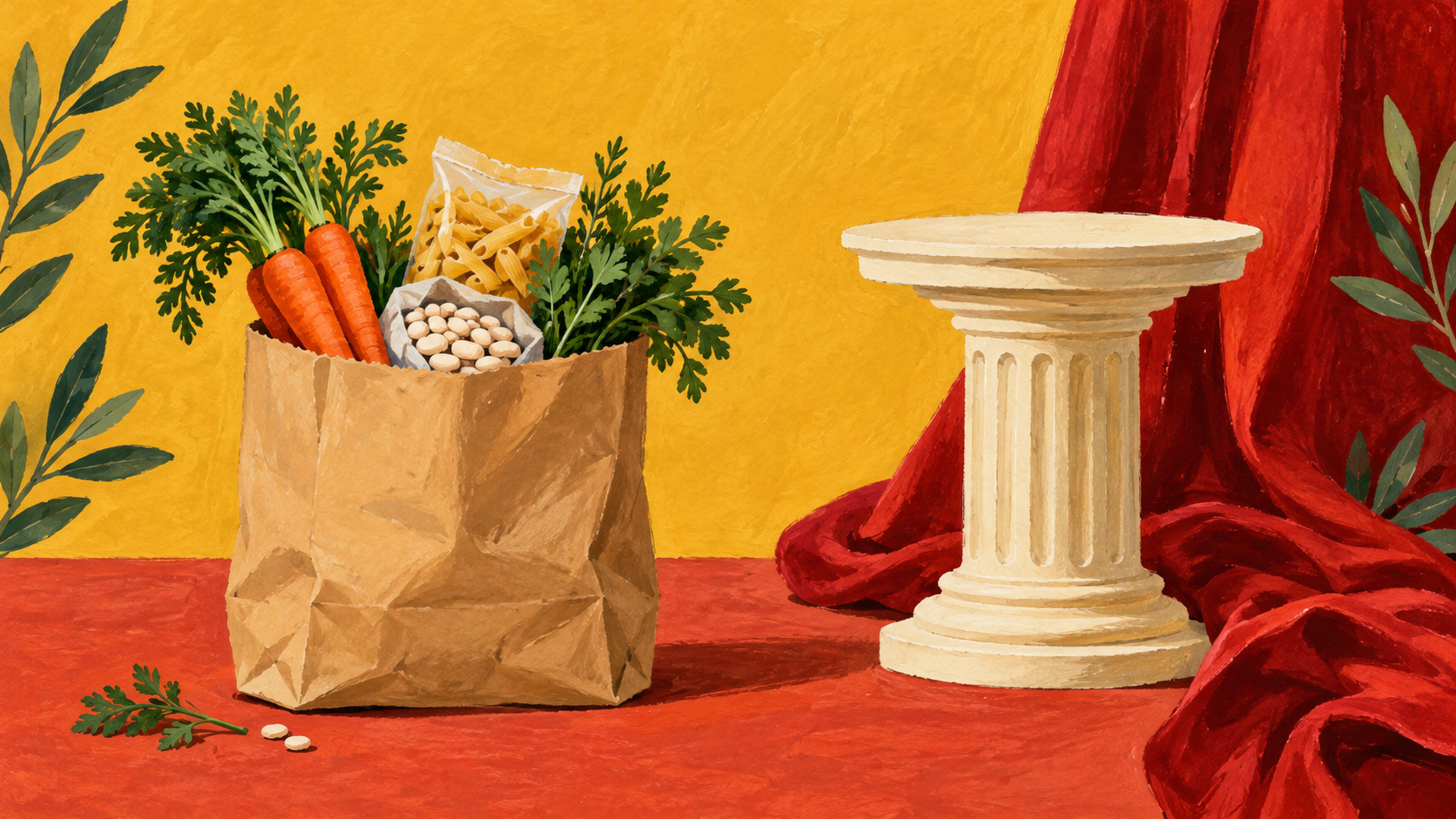
There is a whole imaginary court sitting above my grocery bag. It has opinions about the bread, the beans and whether buying a shortcut means I have failed to become a sufficiently interesting adult. The court has never washed my dishes.
The current discussion of AI and food-content creators reminded me how easily online food becomes a performance about the person making it. The meal is almost secondary. The important thing is that the shopping demonstrates your values in a flattering light.
I would like the bag to demonstrate that dinner can happen.
On an ordinary Toronto evening, I am deciding what I can carry home, what is already waiting and how much attention I can supply after work. Those are useful constraints. They do not need a dramatic explanation about whether I belong to the authentic-cooking community.
Sometimes a prepared ingredient is the thing that makes a meal possible. Sometimes I want to spend an afternoon making the longer version because I enjoy the work. Both experiences can live in the same kitchen without accusing one another of fraud.
The annoying part is advice that turns a preference into a test of character. A person can describe why they like a particular method. They can show what it changes. They can explain a tradeoff. They lose me when the explanation becomes a smug account of what sort of person takes the other option.
My small test for food content is whether it gives me a useful question. Does this fit the time I have? Will I use the rest of the ingredient? What does the change do to the dish? That is much better company than another performance about how a virtuous kitchen looks.
The beans in my bag have one assignment. They are going into dinner. If they also provide material for a moral philosophy, I would prefer the philosophy to arrange its own transport home.

A thought worth keeping?