There is a particular sentence in a recipe that makes me put down the spoon and stare at the page: soften the onion for two minutes. Two minutes? I have barely persuaded the pan, onion and wooden spoon to become acquainted.
Some dinners really are quick. Others are quick only if someone has already chopped everything, found every spice, washed a board and completed the part of cooking that the recipe has mysteriously placed outside time. I do not have a television assistant crouching beneath the counter. I have a hungry household and yesterday's mug in the sink.
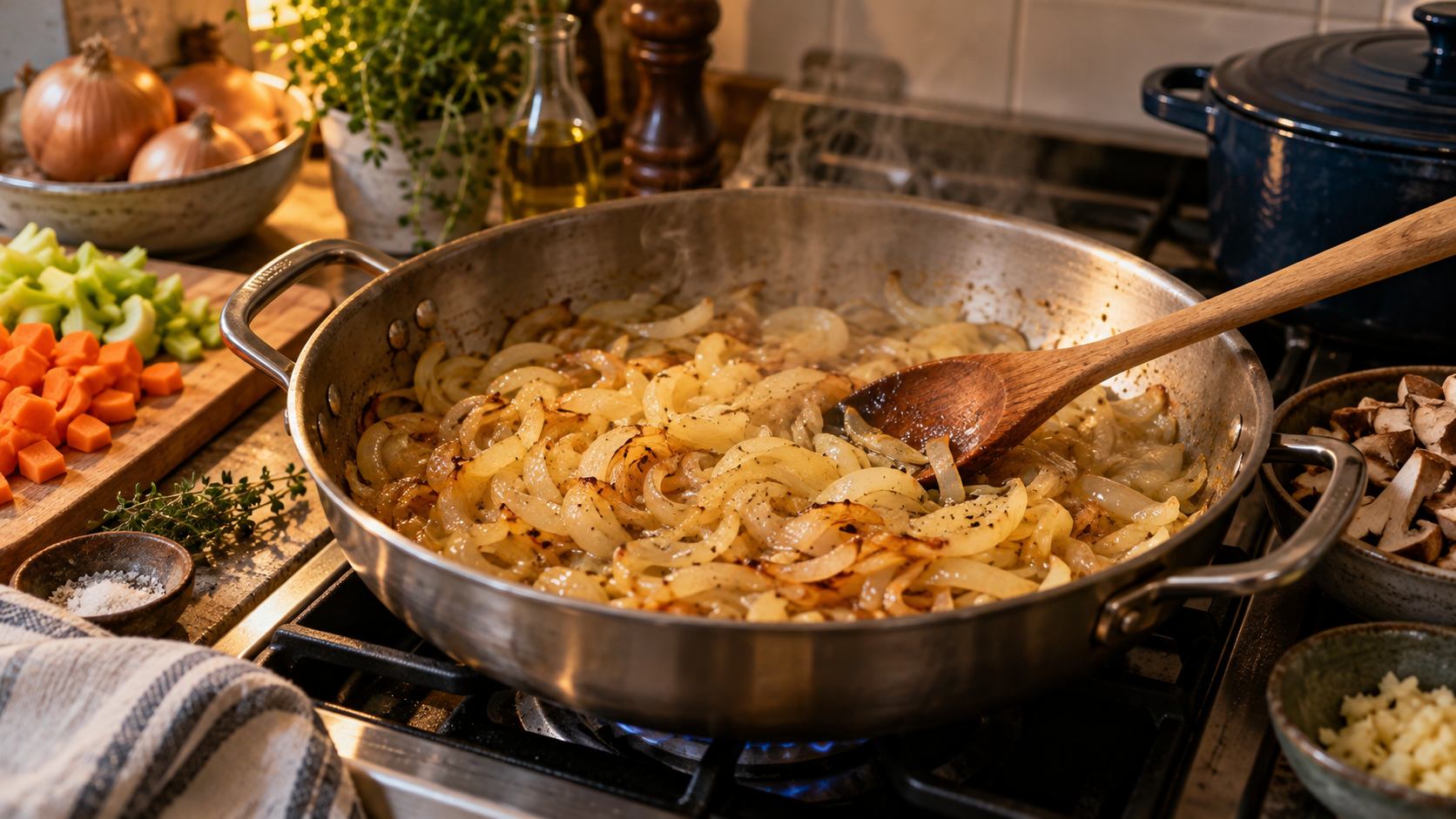
The onion is where this fantasy usually becomes visible. Mine begins loud, sharp and full of opinions. For the meal I am making, I want it softer and sweeter. I have to watch what is happening in my pan, rather than treating a printed number as a command to stop noticing.
Start the bit that needs your patience
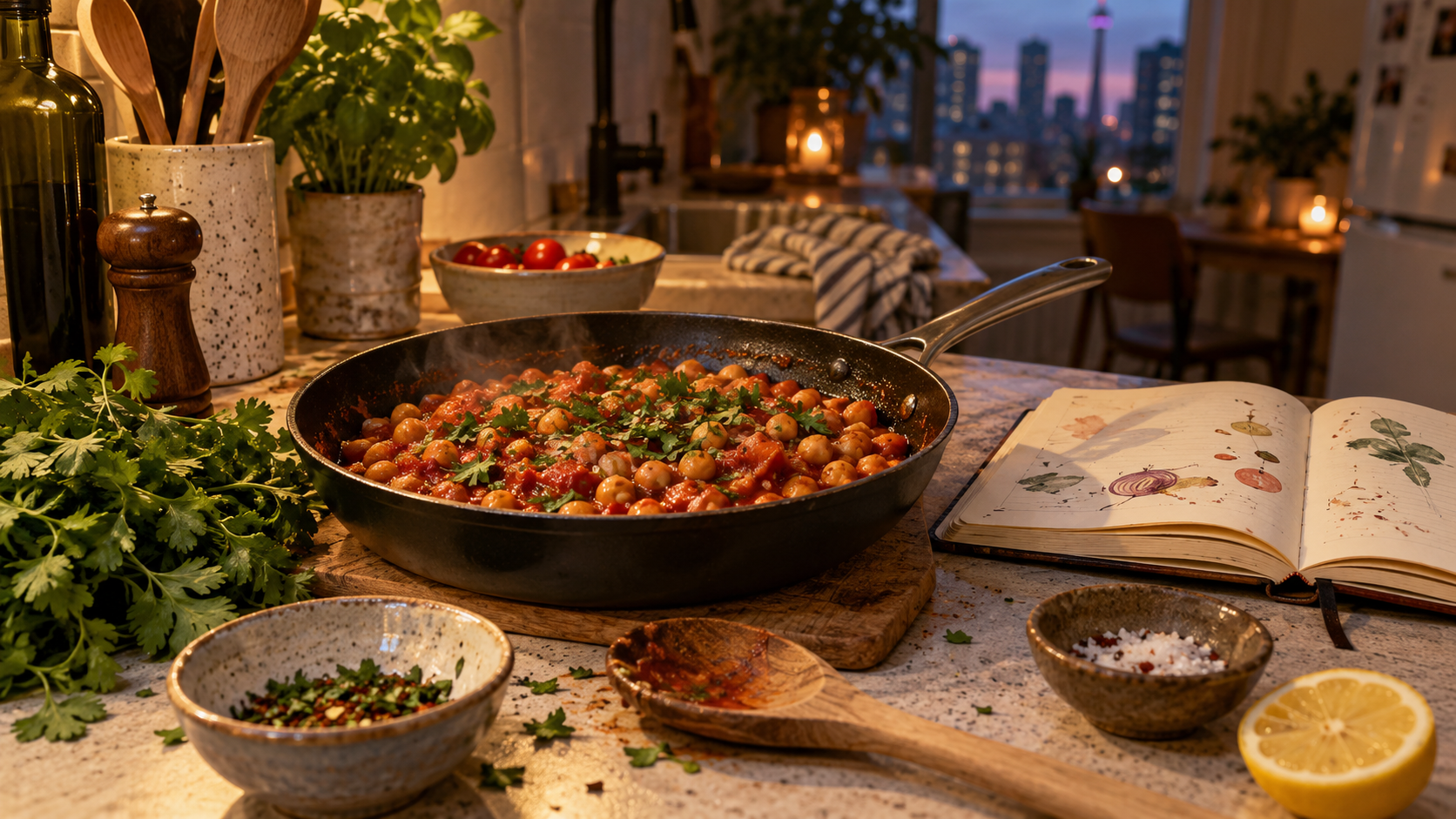
When I make a bean-and-tomato supper, I put the onion on first and use that interval for the rest of the small jobs. I find the beans, rinse them, open the tomatoes and clear a place for the chopping board. I keep an eye on the pan and adjust the heat as needed. The preparation happens around the cooking instead of becoming an invisible preliminary ceremony.
That arrangement feels much calmer than assembling an immaculate row of bowls before beginning. An immaculate row is lovely if you enjoy it. In my kitchen it produces more washing-up and a vague feeling that a stranger has organized dinner for a camera crew.
I am also careful about the word soft. I mean the result I want in this particular dish. Other dishes need a different texture. A brisk stir-fry and a slowly cooked base have different intentions. The mistake is not choosing speed; it is describing two different results as though they were interchangeable.
For the bean supper, I let the onion become pleasant to taste before the tomatoes arrive. I stir, look and occasionally taste an appropriately cooled little piece. The notebook records what I saw. It does not claim the same minute count will work on everybody's stove.
The timer is not the whole meal
A friend asked whether this habit made dinner slower. It made the estimate less fictional. That is different. If a meal needs some patient cooking, I would rather know while I am choosing what to make than discover it after announcing that food will be ready immediately.
There are evenings when I choose toast, eggs or leftovers because that is the time I actually have. There is nothing morally superior about turning every Tuesday into a miniature cooking competition. A realistic easy dinner is more useful than a supposedly instant dinner that makes everyone cross.
Once the beans and tomatoes are in, I let the flavors settle together, then taste before adding the finishing details. A little brightness, a handful of herbs, perhaps something crunchy alongside. I do not need fourteen ingredients to prove that the meal exists.
The first time I wrote this sequence down, I included finding the missing tin opener. That felt ridiculous until I realized it was the most accurate part of the timing. Cooking happens in a room inhabited by people. Drawers get untidy. Someone borrows the good spoon. The useful recipe admits that world into its plan.
I still like quick dinners. I like them much more when the speed comes from a sensible sequence and a modest ambition, rather than an onion being asked to break the laws of my kitchen.

A thought worth keeping?