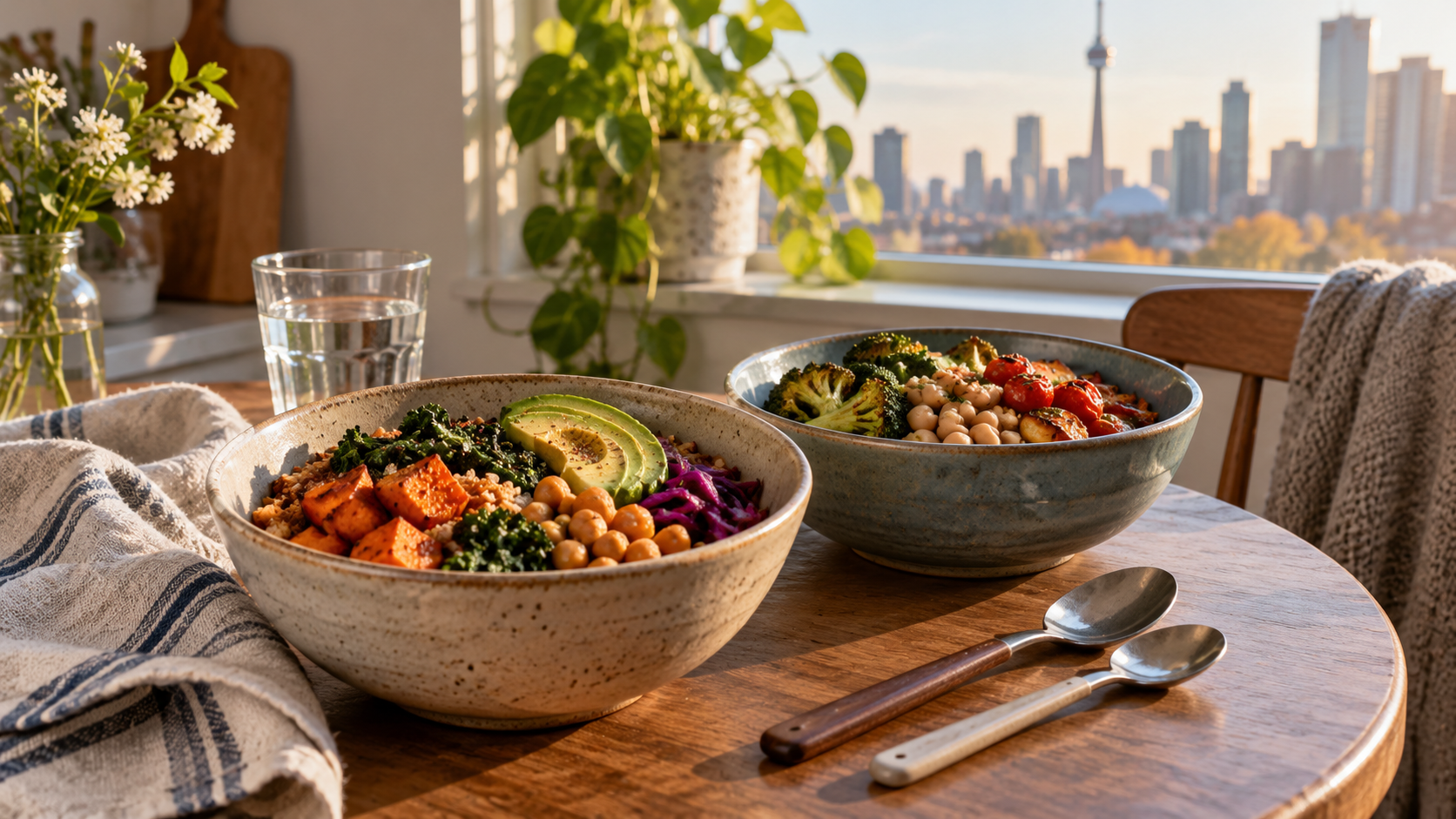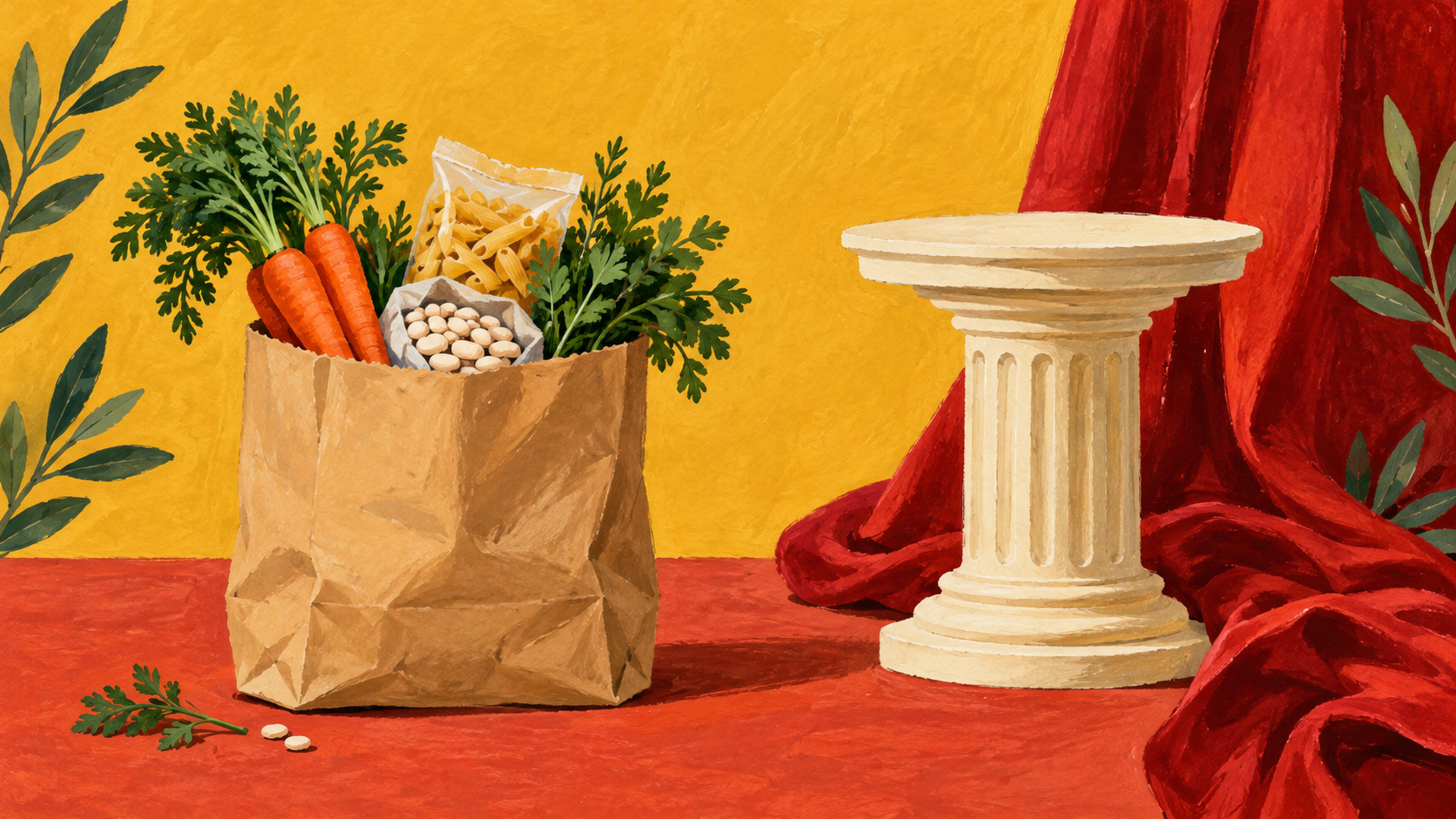
At half past six I decided we needed a shopping trip. At twenty to seven I decided that decision was mostly fatigue wearing a very convincing coat.
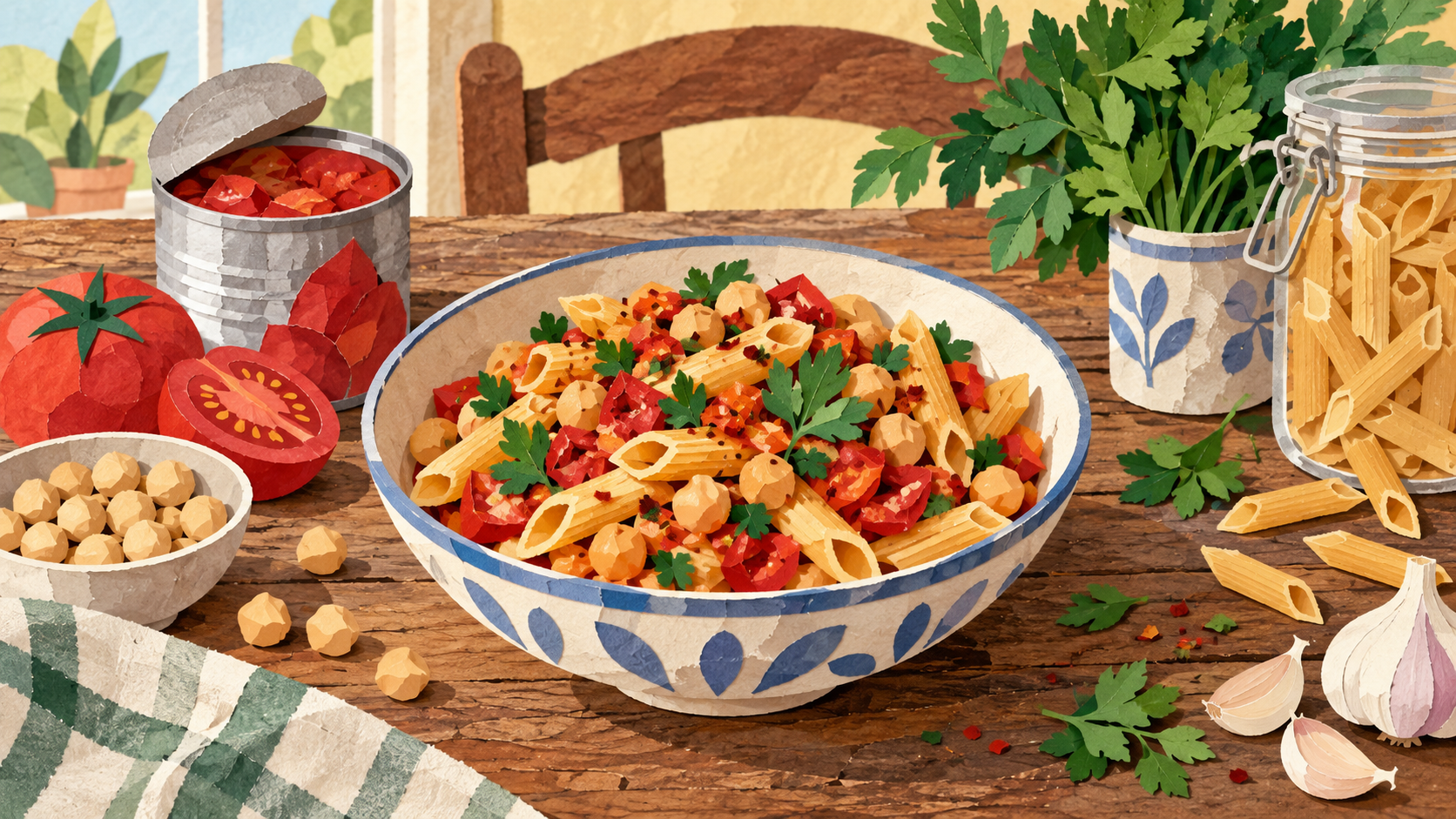
The cupboard contained chickpeas, tomatoes and pasta. The fridge contained half a pepper, a small amount of spinach and a lemon that still had work to do. Dinner was present. It simply had not organized itself into a recipe title.
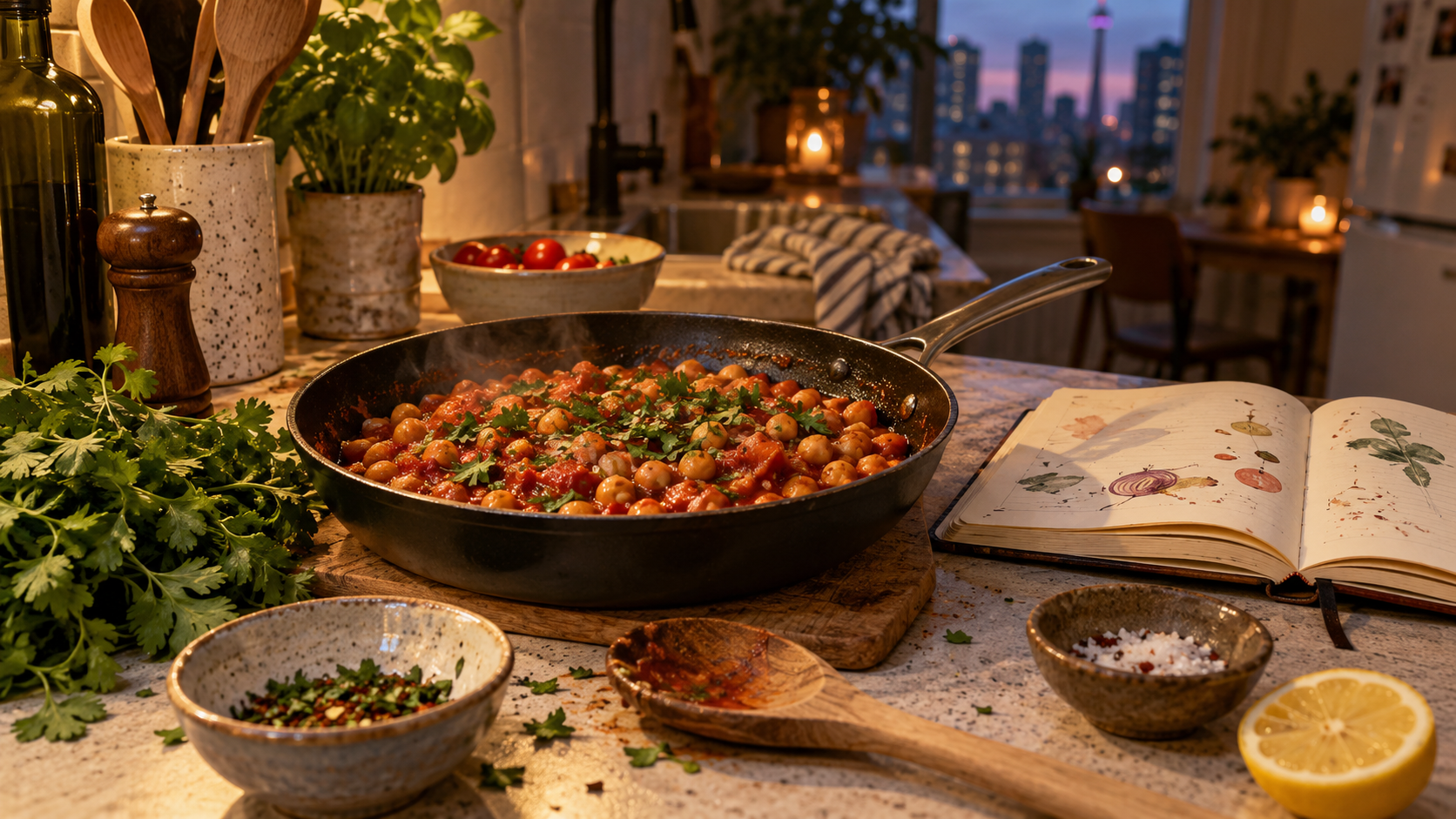
I softened an onion while making a little list of what needed using. The pepper went in next. Tomatoes made a sauce, chickpeas made it substantial and spinach arrived near the end. The pasta cooked separately. A squeeze of lemon and some chopped parsley made the bowl feel brighter than the contents of the cupboard had suggested.
No quantities here, because this particular supper was a useful response to what I had. I tasted and adjusted. I watched the texture. I made enough for the people at the table, rather than enough to match a photograph.
The lesson in my notebook is a question: what job does each ingredient do? Something substantial, something saucy, something fresh, something that adds a different texture. Thinking that way gives me more options when the exact ingredient in a saved recipe is missing.
It also helps me avoid the everything-in-one-pan disaster. A cupboard dinner is still allowed to have a sequence. Some things need longer. Some things become less pleasant if I leave them there forever. Improvising does not require abandoning my eyes.
We ate. The sink acquired a few dishes. The unopened shopping app remained exactly where it was. I had saved myself a trip, a queue and another opportunity to buy an ingredient whose main purpose would be making next week's cupboard more crowded.

A thought worth keeping?